
 EN
EN
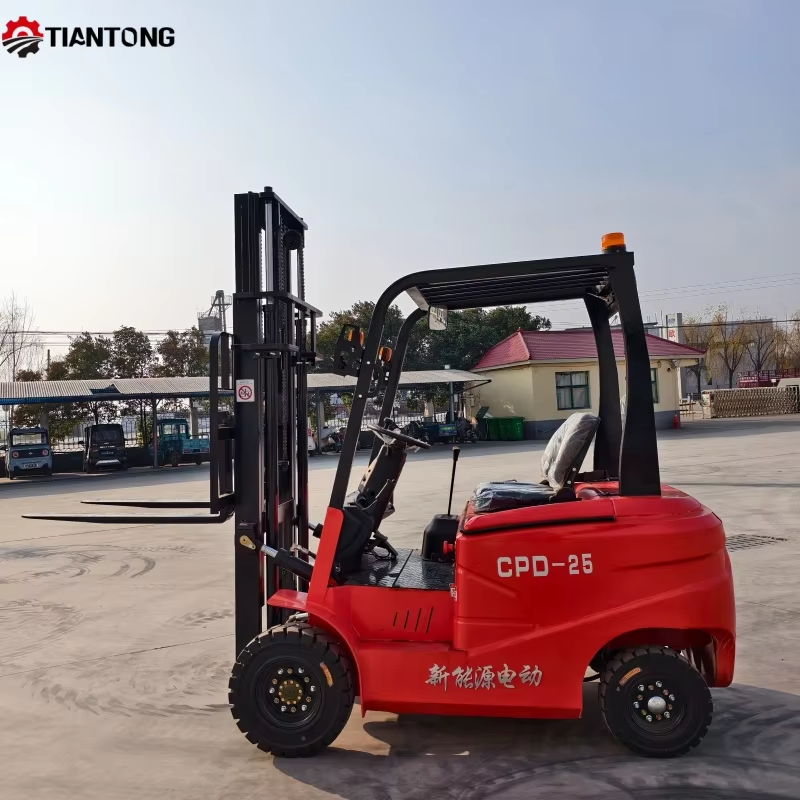
Charging Right: Best Practices That Extend Battery Powered Forklift Life and Performance
Battery performance directly governs electric forklift productivity and lifecycle cost. A poorly managed battery system degrades capacity prematurely, shortens daily runtime, and forces early replacement — erasing the operating-cost advantage that justified the electric transition. Battery powered forklift adoption succeeds or fails on the strength of the battery-management practices implemented from day one.
Battery Chemistry Selection
Lead-Acid vs. Lithium-Iron-Phosphate: Matching Chemistry to Duty Cycle
Lead-acid batteries remain dominant in electric forklifts because of lower upfront cost and 98%+ recycling infrastructure. A 60V / 350Ah lead-acid pack costs approximately $2,500–4,000 and delivers 1,200–1,500 charge cycles when properly maintained. The protocol: full-cycle charging after each shift, weekly watering, monthly equalization, replacement at 80% capacity.
Lithium-iron-phosphate (LiFePO4) batteries cost 2–3 times the lead-acid equivalent — $6,000–10,000 — but deliver 2,500–3,500 cycles and eliminate watering, equalization, and hydrogen-venting management. Lithium accepts opportunity charging (partial charges during breaks) without the sulfation damage that degrades lead-acid batteries, making lithium preferred for multi-shift operations.
Jining Tiantong Machinery's electric forklifts support both chemistries. The 2-ton model's standard 5 × 70Ah dry-cell lead-acid system delivers 4–8 hours of operation with 6–7 hours charging on 220V — suitable for single-shift operations. Lithium configurations extend both runtime and cycle life for multi-shift schedules.
Why Battery Sizing Must Match the Shift's Actual Energy Demand
Undersized batteries force deep discharges that accelerate capacity degradation. Oversized batteries add unnecessary cost and weight. The correct battery capacity provides enough energy for the longest expected shift at the highest expected duty cycle, with 15–20% reserve capacity remaining at shift end. Operating consistently below 20% state of charge accelerates lead-acid sulfation and lithium anode degradation.
Facilities should conduct a one-week energy audit before specifying battery capacity: log actual operating hours, travel distance, lift count, and load weight distribution across representative shifts. Use this data — not manufacturer-estimated runtime at rated load — to specify battery capacity. Tiantong Machinery offers battery capacity adjustment based on working-hour requirements, with 60V systems configurable for different amp-hour ratings to match actual facility duty cycles.
Charging Discipline
Opportunity Charging vs. Full-Cycle Charging
Lead-acid batteries require full-cycle charging: discharge to approximately 20–30% state of charge, then charge uninterrupted to 100%. Partial charges — plugging in during a 30-minute lunch break, then resuming operation — create stratified electrolyte (acid concentration varies by height in the cell) and accelerate sulfation of partially charged plates. The result is permanent capacity loss accumulating at 3–5% per month under frequent opportunity charging.
Lithium batteries accept opportunity charging without degradation, because lithium-ion chemistry does not sulfate and the battery management system (BMS) maintains cell balance regardless of charge depth. This operational flexibility — charge during any 15–30 minute break without battery damage — is lithium's primary operational advantage in busy warehouses where continuous operation is required. The additional lithium purchase cost is recovered through reduced downtime and extended battery life.
Temperature Management During Charging
Lead-acid batteries generate approximately 3–5°C temperature rise during a full charge cycle. Charging above 35°C ambient accelerates grid corrosion and water loss. Maintain charging areas below this threshold and allow 30–60 minutes cool-down after heavy discharge before charging. Lithium batteries include integrated BMS thermal monitoring that limits charge current if cell temperatures exceed safe thresholds — simplifying thermal management but potentially slowing charging during hot-weather conditions.
Real-World Battery Management Outcome
A food-distribution warehouse operating 14 electric forklifts across two shifts replaced lead-acid batteries unscheduled — when operators reported reduced runtime — resulting in widely variable lifespan (800–1,800 cycles) and unpredictable replacement budgeting. After implementing standardized practices — full-cycle charging, weekly watering logs audited by supervisors, monthly equalization scheduling, and quarterly load-bank testing to trigger replacement at 80% capacity — average battery lifespan increased to 1,400+ cycles. The disciplined program, supported by Tiantong Machinery's battery specification flexibility, reduced annual replacement spend by approximately 22%.
Frequently Asked Questions
How often should lead-acid forklift batteries be watered?
Water every 5–10 charge cycles, depending on ambient temperature and discharge depth. Always water after charging (never before — electrolyte expands during charging and overflows if watered first). Use only distilled or deionized water. Tiantong supplies watering guidelines specific to each battery configuration with equipment delivery.
Can one charger serve multiple battery powered forklifts?
Yes — a single charger can service multiple batteries sequentially, but only one battery charges at a time. Multi-shift operations requiring simultaneous charging of multiple batteries need one charger per battery. Configure charging schedules so battery charging completes within the available between-shift window.
What indicates a forklift battery needs replacement?
Replace lead-acid batteries when capacity drops below 80% of original rating — typically after 1,200–1,500 cycles. Indicators include reduced shift runtime, increased charging frequency, visible plate corrosion, and failing to hold voltage under load. Quarterly load-bank testing provides objective capacity measurement rather than relying on operator perception.
Are lithium forklift batteries safer than lead-acid?
Lithium batteries carry a different risk profile — thermal runaway risk if cells are physically damaged or the BMS fails — versus lead-acid risks of hydrogen off-gassing, acid spills, and electrical short circuits through conductive battery tops. Both chemistries are safe when operated within manufacturer protocols. Lithium batteries benefit from no hydrogen generation and sealed construction.
How does battery weight affect forklift stability and capacity?
Battery weight contributes to the forklift's counterweight — the mass that offsets the load on the forks. Lead-acid batteries are heavier than equivalent-capacity lithium packs. Tiantong Machinery's electric forklifts are engineered with battery weight factored into the stability triangle calculation, ensuring rated capacity is achievable with the specified battery configuration.
What is the environmental impact comparison between lead-acid and lithium forklift batteries?
Lead-acid batteries achieve 98%+ recycling rates through established infrastructure — the most recycled consumer product globally. Lithium battery recycling infrastructure is developing rapidly but currently achieves lower recovery rates. Both chemistries are superior to the continuous emissions of internal combustion forklifts over the equipment lifecycle.