
 EN
EN
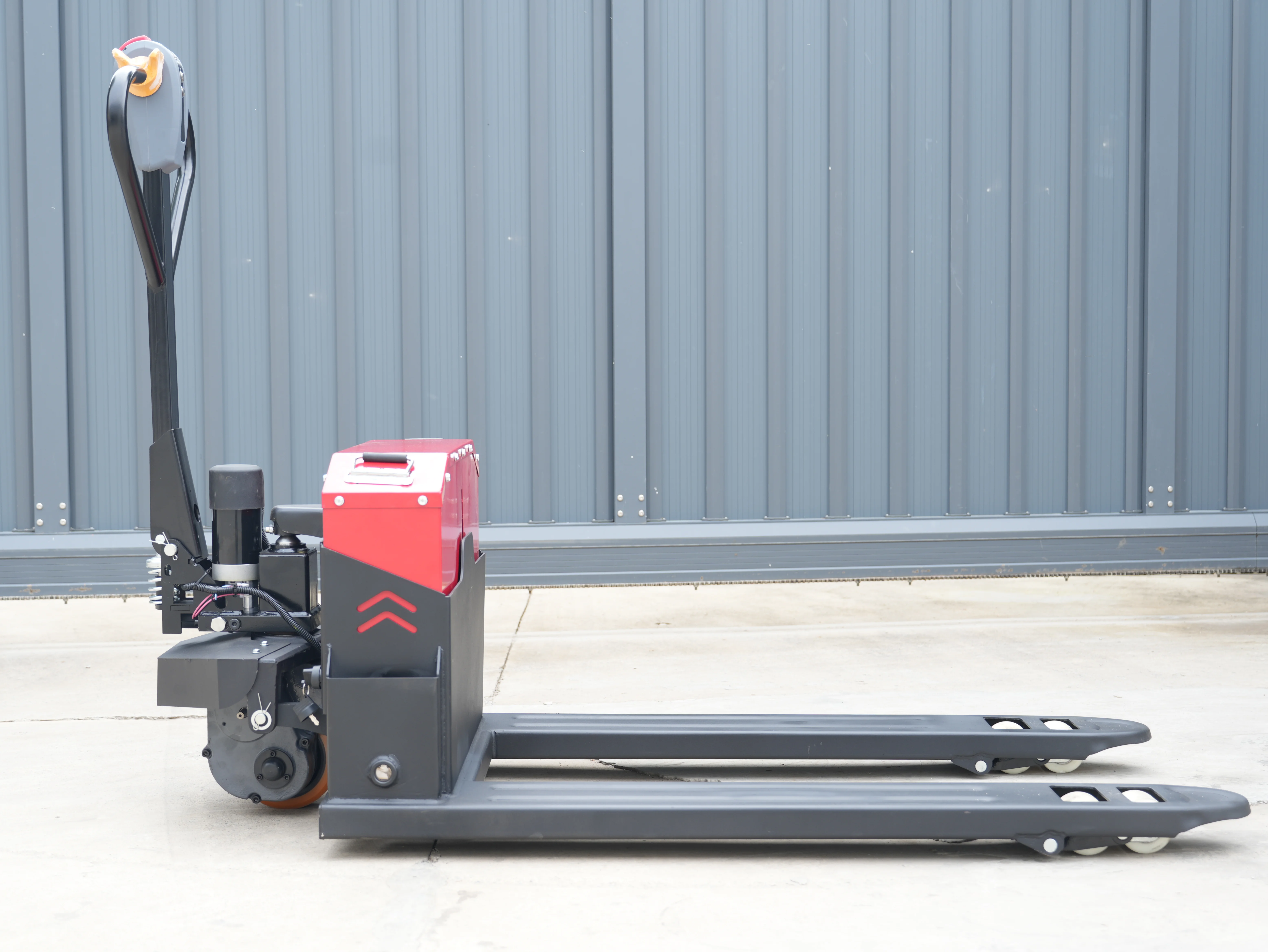
How a Battery Pallet Stacker Turns the Warehouse Energy Equation Upside Down
Warehouse energy costs follow a brutal logic: every pallet moved burns fuel. A diesel forklift consuming 2.5 liters per hour across an 8-hour shift spends roughly 20–30 per day on fuel at current diesel prices — multiplied by three to five forklifts across a mid-size warehouse, that is 15,000–45,000 annually in fuel alone. Add emissions compliance costs in regions with indoor air-quality regulations, engine maintenance every 500 hours, and the ventilation infrastructure required to exhaust diesel fumes, and the total cost of internal combustion material handling becomes a line item that warehouse managers cannot ignore.
A battery pallet stacker — the compact, electric-powered lift truck designed for stacking pallets in narrow aisles and tight racking configurations — rewrites this equation from the bottom up. The electric drive motor consumes kilowatt-hours instead of liters. At an industrial electricity rate of 0.10–0.15 per kWh and a typical consumption of 3–5 kWh per 8-hour shift, the daily energy cost of a battery pallet stacker runs between 0.30 and 0.75 — roughly 3% of the daily diesel cost for equivalent lifting work. Tiantong Machinery, a Shandong-based electric forklift manufacturer with over 10 years of experience, produces battery pallet stackers powered by 60V lithium battery packs with intelligent energy recovery systems that recapture energy during braking and lowering, further reducing net consumption by 10–15%.
The Energy Math: Where the Savings Come From
Electric vs. Diesel: The Three-Factor Cost Gap
The 70% energy-cost reduction that electric material handling equipment delivers compared to diesel comes from three factors that compound. First, electric motors convert over 85% of input energy into mechanical work — a diesel engine converts roughly 30–40%, with the rest lost as heat, vibration, and exhaust. Second, electric equipment has zero idle consumption — a diesel forklift burns fuel while the operator waits for a truck to arrive or a rack to clear, typically 25–30% of total engine-on time. An electric motor draws zero power at standstill. Third, electric drivetrains have roughly one-tenth as many moving parts as a diesel powertrain, cutting maintenance labor and parts costs by 60–80% over the equipment's service life.
Tiantong Machinery's battery pallet stackers deploy lithium battery technology from suppliers like Chaowei, with capacity scalable to match shift duration. A standard 60V system with 70 Ah per battery module delivers 4–8 hours of continuous operation per charge, recharges in 6–7 hours on a standard 220V outlet, and supports opportunity charging during breaks without developing the memory effect that degrades lead-acid batteries. Overcurrent and overvoltage protection circuits in the battery management system prevent the deep-discharge damage that shortens battery life in poorly managed fleets.
Real-World Application: A Cold Storage Warehouse's Diesel-to-Electric Switch
A frozen-goods distribution center in Northern Europe operated four diesel forklifts in a -20°C cold storage environment. The diesel engines struggled to start reliably at subzero temperatures, requiring block heaters that added 30 minutes to each shift startup. Indoor emissions — even with ventilation — exceeded the facility's air-quality targets because diesel particulates accumulate faster in sealed cold-storage environments where air exchange is limited to minimize refrigeration loss.
Converting to Tiantong Machinery's electric pallet stackers with lithium batteries solved all three problems simultaneously. Lithium batteries maintain over 90% of their rated capacity at -20°C — unlike lead-acid batteries that lose 30–50% of capacity in freezing conditions — so the stackers started reliably every shift without preheating. The electric drive produced zero emissions, eliminating the ventilation-run-time increase that diesel fumes had required. And the facility's energy cost per pallet moved dropped from approximately 0.18 (diesel + ventilation energy) to 0.03 (electricity only), saving an estimated $28,000 annually across the four-unit fleet.
Frequently Asked Questions
How long does a battery pallet stacker run on a single charge?
Typical runtime is 4–8 hours depending on load weight, lift frequency, and battery capacity. Light-duty operations (fewer than 50 lifts per hour, loads under 1 ton) can achieve a full shift. Heavy-duty operations (continuous stacking, loads near capacity) may require a mid-shift battery swap or opportunity charging. Tiantong Machinery offers configurable battery capacity to match specific shift requirements.
Can lithium batteries handle cold storage environments?
Yes. Lithium iron phosphate (LiFePO₄) batteries maintain over 90% of rated capacity at -20°C, compared to lead-acid batteries that lose 30–50%. Lithium batteries also charge faster, handle partial-state-of-charge operation without degradation, and last 3–5 times longer than lead-acid equivalents. Tiantong Machinery's stackers support lithium battery configurations optimized for cold environments.
What maintenance does a battery pallet stacker require?
Daily: check battery charge level, inspect forks for damage, verify brake function. Weekly: clean battery terminals, check hydraulic fluid level, inspect tires for wear. Monthly: test safety systems (emergency stop, overload protection), verify lift-chain tension. The electric drivetrain eliminates engine oil changes, fuel filter replacements, and exhaust system maintenance. Tiantong Machinery provides maintenance checklists with every unit.
What is the difference between a pallet stacker and a forklift?
A pallet stacker is a compact electric lift truck designed for stacking pallets in narrow aisles (typically 2.5–3 m wide) at heights up to 4–6 m. A counterbalance forklift handles heavier loads (2–5 tons) and outdoor surfaces but requires wider aisles. Stackers cost less, use less energy, and maneuver better in tight warehouse layouts.
Are battery pallet stackers suitable for outdoor use?
Most battery pallet stackers are designed for indoor use on smooth, level floors (concrete, epoxy). Outdoor operation on uneven surfaces requires pneumatic tires, higher ground clearance, and weatherproof electrical enclosures. Tiantong Machinery offers solid rubber tires suitable for occasional outdoor use on paved surfaces and can configure units for mixed indoor-outdoor environments.
What safety features should a battery pallet stacker include?
Emergency stop button, overload protection (automatic lift limit when exceeding rated capacity), automatic braking on handle release, non-slip platform, safety guard around the mast, and LED lighting for low-visibility areas. Tiantong Machinery's stackers include CE and ISO 9001 certified safety systems as standard equipment.