
 EN
EN
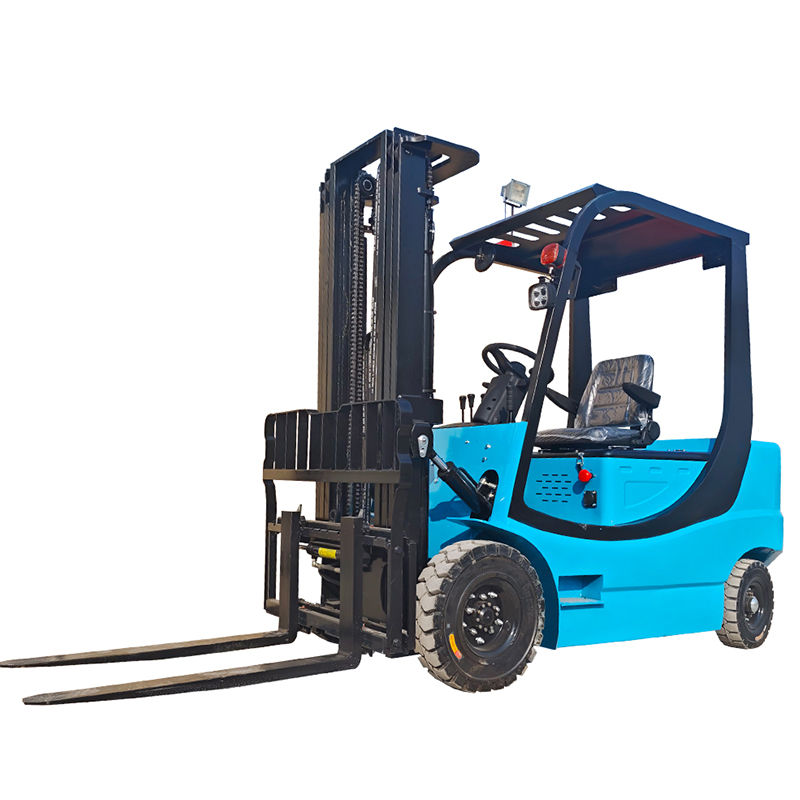
Before the First Charge: A Warehouse Electric Forklift Adoption Checklist
Transitioning from internal combustion to electric forklifts involves more than signing a purchase order. Operational readiness — charging infrastructure, battery management protocols, operator training, and maintenance planning — determines whether the transition delivers the promised ROI or generates unplanned downtime. This checklist covers the critical steps that successful warehouse electrification projects complete before the first electric forklift arrives on the dock.
Infrastructure Preparation
Charging Station Placement and Electrical Service
Electric forklift charging stations should be positioned to minimize travel distance from the primary work zone while maintaining adequate ventilation for lead-acid battery charging — hydrogen off-gassing during the charge cycle requires 1–2 air changes per hour in the charging area per OSHA 1910.178(g) and NFPA 505 guidelines. Lithium-ion batteries do not off-gas during normal charging, simplifying ventilation requirements.
Electrical service capacity must accommodate simultaneous charging of the fleet. A single 2-ton electric forklift with a 60V / 350Ah battery draws approximately 3–4 kW during charging. A fleet of 10 forklifts charging simultaneously requires 30–40 kW of dedicated electrical capacity — verify that the facility's electrical service and distribution panel can accommodate this load before ordering equipment. Jining Tiantong Machinery's electric forklifts use standard 220V single-phase charging, minimizing electrical infrastructure complexity compared to 480V three-phase requirements of some larger-capacity electric models.
Physical charging-station layout should allow forklift approach and departure without congestion. Dedicate approximately 2.5 × 1.5 meters per charging bay, with clear floor markings and overhead cable management to prevent trip hazards and cable damage. The Tiantong 2-ton model's 1.2-meter width and 180-degree zero-turn steering radius enable compact charging-bay layouts that larger forklifts cannot navigate.
Battery Management Protocol Design
Battery management governs both battery lifespan and operational availability. For lead-acid batteries, the protocol should specify: opportunity charging policy (is partial charging during breaks permitted, or only full-cycle charging after shift completion?), battery watering schedule (distilled water top-up every 5–10 charge cycles depending on ambient temperature), equalization charging frequency (monthly overcharge to balance cell voltages), and battery rotation system for multi-shift operations requiring battery swaps.
For lithium-iron-phosphate batteries, the protocol simplifies — no watering, no equalization, and opportunity charging is not only permitted but preferred (lithium batteries degrade less from frequent partial charges than from deep discharge cycles). The simpler protocol reduces labor but requires operator training on the different charge indicators and any battery management system (BMS) display the manufacturer provides.
Operator Transition Training
Key Differences Electric Operators Must Internalize
Operators transitioning from internal combustion forklifts need training on three electric-specific characteristics. First, regenerative braking — releasing the accelerator pedal on an electric forklift engages motor braking that slows the truck more aggressively than an IC forklift coasting in neutral. Operators accustomed to coasting must adjust approach-speed judgment at rack faces and dock edges.
Second, near-silent operation — at 60–65 dBA versus 85–90 dBA for internal combustion — changes warehouse auditory awareness. Pedestrian workers accustomed to hearing approaching forklifts lose that acoustic warning. Facilities should implement supplementary pedestrian awareness measures: blue "spot" lights projected in front of and behind the forklift, LED strobes activated during movement, and reinforced horn-use protocols at blind intersections.
Third, torque characteristics — electric motors deliver 100% of rated torque from zero RPM, producing quicker acceleration than equivalent IC forklifts. Operators should practice controlled acceleration in training scenarios before entering active warehouse aisles. The Tiantong 4000W dual AC motor system provides smooth, predictable acceleration that operators adapt to within one to two shifts of supervised operation.
Real-World Transition
A regional distribution center transitioning eight LP gas forklifts to Tiantong electric models developed their adoption checklist through a pilot program: two electric units deployed for 60 days with selected operators, during which the facility documented charging patterns, identified optimal charging-station locations, adjusted battery-watering schedules based on actual usage data, and refined operator training materials based on pilot-operator feedback. The full fleet transition following the pilot phase completed in four weeks with zero safety incidents and only two hours of unplanned downtime — both from charging-cable positioning issues resolved through revised bay layouts. The disciplined approach of pilot-first, fleet-second is worth emulating for any multi-unit transition.
Frequently Asked Questions
How many charging stations does a warehouse need per electric forklift?
One dedicated charging station per electric forklift is standard for single-shift operations where each truck charges overnight. Multi-shift operations with battery swapping require one charging station per battery plus one spare. Tiantong Machinery provides charging infrastructure planning support with each fleet order.
Can existing warehouse electrical panels support electric forklift charging?
A standard 200-amp warehouse electrical panel typically supports 4–6 simultaneous electric forklift charges before approaching capacity limits. Facilities planning larger electric fleets should commission an electrical load study. 220V single-phase chargers — standard on Tiantong models — simplify electrical integration compared to 480V three-phase systems.
How long does operator training take for the electric transition?
Experienced forklift operators adapt to electric models within one to two shifts. The training focus areas are regenerative braking behavior, torque-response differences, and pedestrian-awareness protocol adjustments for quieter operation. Tiantong provides operator familiarization documentation with equipment deliveries.
What ventilation changes does an electric forklift fleet require?
Lead-acid battery charging areas require 1–2 air changes per hour per OSHA and NFPA guidelines for hydrogen dispersion. Warehouse spaces previously ventilated for internal combustion exhaust often exceed this requirement. Lithium-ion battery charging requires no special ventilation. The ventilation reduction from eliminating combustion exhaust is a secondary operational benefit.
Does cold storage affect electric forklift battery performance?
Lead-acid batteries lose 20–30% of available capacity at -20°C, reducing shift runtime proportionally. Lithium batteries with thermal management systems lose less capacity in cold environments. Tiantong offers cold-storage-configured electric forklifts with appropriate battery specifications and cold-rated hydraulic fluids for freezer applications.
What fire safety considerations apply to electric forklift charging areas?
Lead-acid charging areas require hydrogen detection or adequate ventilation. Lithium-ion charging areas should include smoke detection, Class D fire extinguishers for metal fires, and charging-station placement away from emergency exits and combustible storage. NFPA 505 provides the relevant fire safety standard for powered industrial truck charging areas.