 EN
EN
When an Electric Forklift Stops: Why Factory-Direct Troubleshooting Support Matters
An electric forklift that will not move during a peak picking shift is not an inconvenience — it is a financial bleed measured in pallets not shipped, trucks not loaded, and labor hours paid for idle workers. The average downtime cost for a single forklift in a busy warehouse runs between 150 and 250 per hour when factoring in labor, logistics disruption, and expedited-shipping surcharges on delayed orders. A forklift that sits dead for four hours while a third-party service technician travels to the site has cost the operation 600–1,000 before a single diagnostic step is taken.
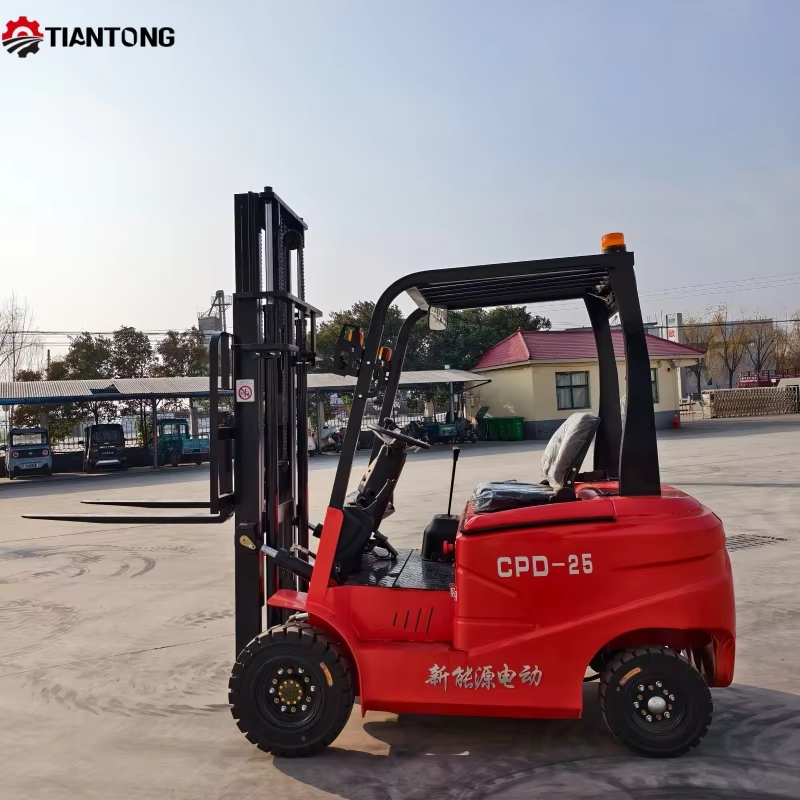
Factory-direct troubleshooting support from the electric forklift manufacturer changes this timeline dramatically. Instead of waiting for an external technician who may never have worked on that specific model, the operator or maintenance team reaches the manufacturer's support line directly, describes the symptom, and receives model-specific diagnostic guidance within minutes. Tiantong Machinery (Jining Tiantong Machinery Equipment Co., Ltd.), a 10-year electric forklift manufacturer producing 2,000 units monthly from its 20-acre Shandong facility, provides this direct support channel as standard with every unit shipped — not outsourced through a regional dealer network that adds communication delay and diagnostic uncertainty to every service call.
Common Electric Forklift Fault Categories
Battery and Power System Diagnostics
When an electric forklift refuses to start, the battery is the first diagnostic checkpoint — not because batteries fail more often than other components, but because battery issues are the most common and fastest to verify. A fully charged 60V system should read 63–66V at rest; a reading below 58V indicates a depleted or failing battery. Tiantong Machinery's forklifts use 5–10 × 70 Ah dry-cell battery modules on the 2-ton model (4000W dual AC motors) and 3-ton model (7500W dual AC motors) respectively, with battery management systems that display real-time voltage and state-of-charge on the dashboard. If the voltage reads normal but the forklift will not move, the diagnostic moves to the motor controller — check for fault codes on the intelligent dashboard display that indicate overcurrent protection engagement, controller overheating, or communication errors between the controller and drive motor.
Hydraulic System Checks
A forklift that drives but will not lift points to the hydraulic system. Tiantong's electric forklifts use reinforced sealed dual cylinders with genuine Tongheli parts and a lifetime leak-proof design. Step one: check the hydraulic fluid reservoir level — fluid loss through slow seepage at cylinder seals can drop the level below the pump intake over months of operation. Step two: listen for the pump motor engaging when the lift lever is operated — a silent pump with a full reservoir suggests an electrical fault between the control handle and the pump motor relay. Step three: if the pump runs but the mast lifts slowly or unevenly, check the multi-leaf chain tension — loose chains on one side create asymmetric lifting that strains the mast rails and produces jerky motion.
Real-World Application: Remote Diagnosis Saves a Distribution Center's Evening Shift
A logistics center in Southeast Asia running three Tiantong 2-ton electric forklifts on an evening shift had one unit stop moving mid-shift — the dashboard showed normal battery voltage but the drive motor would not engage. The on-site technician called Tiantong Machinery's factory support line. The support engineer guided the technician through the motor controller fault-code check, which displayed an overcurrent protection lockout — triggered when the forklift had attempted to climb a ramp with an overloaded pallet earlier in the shift. The fix was a controller reset procedure (power off, wait 30 seconds, restart with the emergency stop disengaged) that took three minutes. The forklift returned to service within the same shift, avoiding four hours of downtime that a third-party service visit would have required. The logistics center later incorporated this reset procedure into its operator training manual, reducing similar calls by 70%.
Frequently Asked Questions
What should I do if my electric forklift will not start?
Check the battery voltage on the dashboard (should read 63–66V at rest for a 60V system). Verify the emergency stop button is disengaged. Check for fault codes on the display. If voltage is low, recharge for at least 30 minutes and retry. If the battery is charged but the forklift will not move, contact Tiantong Machinery's factory support team for model-specific diagnostic guidance.
How often should electric forklift hydraulic fluid be checked?
Check the hydraulic fluid level weekly using the reservoir sight glass or dipstick. Low fluid causes slow lifting and pump cavitation damage. Replace hydraulic fluid and filter every 2,000 operating hours or annually, whichever comes first. Tiantong's sealed dual-cylinder design minimizes leakage but routine level checks remain essential.
What do the fault codes on my forklift's dashboard mean?
Common codes include: overcurrent protection (controller engaged after detecting excess motor current, typically from overloading), low battery voltage warning (below 10% state of charge), motor over-temperature (controller has reduced power to prevent motor damage), and communication error (wiring fault between dashboard and controller). Tiantong Machinery provides a complete fault-code reference with every unit.
How long do electric forklift motors typically last?
AC drive motors in forklift applications typically last 10,000–15,000 operating hours with proper maintenance — roughly 5–7 years in single-shift operation. Motor life is extended by avoiding chronic overloading, keeping cooling vents clean, and addressing unusual noise or vibration immediately before bearing wear progresses to winding damage.
Can I perform my own forklift maintenance or do I need a certified technician?
Daily checks (battery, tires, forks, brakes, lights) can be performed by trained operators. Monthly inspections (hydraulic system, chain tension, electrical connections) should be performed by a qualified maintenance technician. Major repairs involving the motor controller, hydraulic cylinder seals, or mast disassembly require manufacturer-approved service. Tiantong Machinery's support team can advise which category a specific repair falls into.
How do I order replacement parts from Tiantong Machinery?
Contact Tiantong's factory support team with your forklift model number and the part description or fault symptom. Common wear parts (solid tires, brake pads, hydraulic seals, batteries, chains) are kept in stock. Less common parts (motor controllers, mast rails, drive axles) may require a 5–10 day lead time. Tiantong ships parts to over 50 countries through 150+ service points globally.